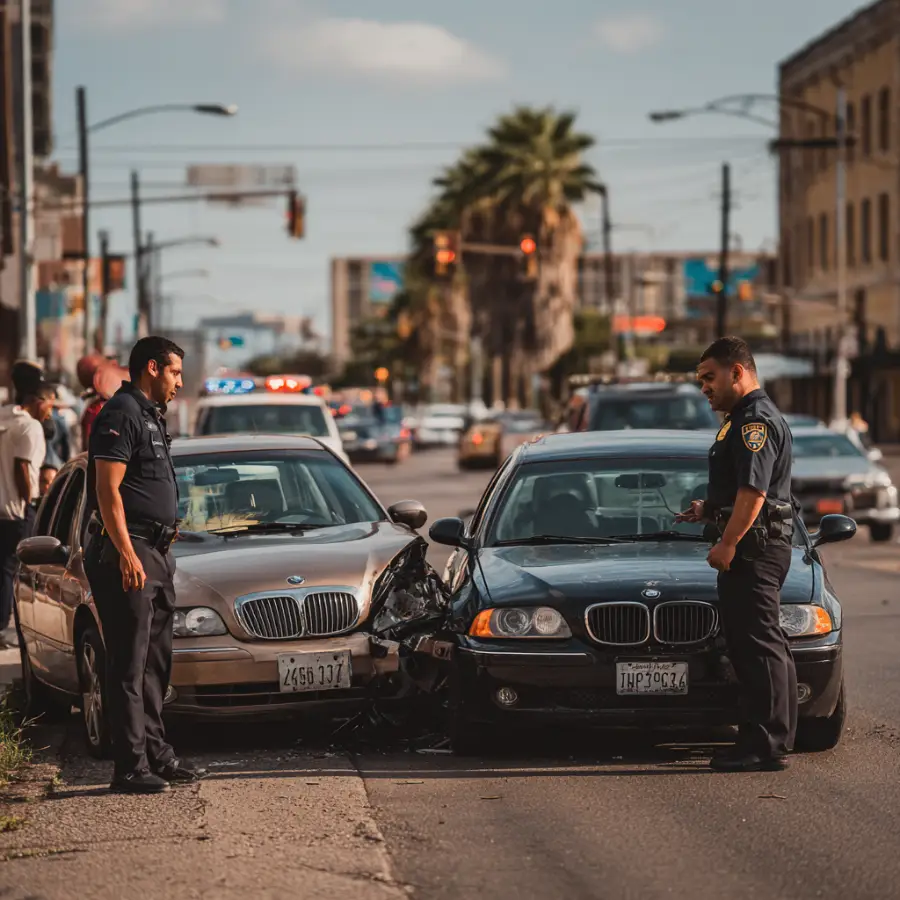

The real numbers: What percent of accidents are caused by human error?
Road accidents worldwide paint a grim picture. Each year, about 1.19 million people lose their lives in road traffic crashes. These numbers tell a shocking story, and knowing what leads to these accidents is vital to prevent them.
Car accident statistics from NHTSA and global studies
Traffic injuries kill more children and young adults aged 5-29 than any other cause. Low and middle-income countries see 92% of road fatalities worldwide, yet they only have 60% of the world’s vehicles. The United States recorded nearly 40,000 traffic deaths in 2020, while crash injuries sent about 2.1 million people to emergency departments.
The National Highway Traffic Safety Administration (NHTSA) conducted the National Motor Vehicle Crash Causation Survey (NMVCCS). Researchers broke down 5,470 crashes over two and a half years to identify the main factors behind accidents. This largest longitudinal study gives us the clearest view of what causes crashes on American roads.
How human error compares to mechanical or environmental causes
The data shows one clear truth: human error dwarfs all other factors. Drivers were responsible for 94% of crashes, while vehicle-related issues and environmental conditions each factored in just 2%.
A closer look at driver-related causes reveals:
-
Recognition errors (inattention, distraction, inadequate surveillance) cause 41% of crashes
-
Decision errors (driving too fast, misjudging others’ actions) lead to 33%
-
Performance errors (overcompensation, poor directional control) make up 11%
-
Non-performance errors like falling asleep result in 7%
Vehicle problems play a much smaller role. Tire/wheel issues cause 35% of vehicle-related crashes, brake problems lead to 22%, and steering/suspension troubles account for just 3%.
Why 90% is not an exaggeration
Studies consistently show that human error causes 90-94% of accidents. The groundbreaking Tri-Level Study from 1979 found that human errors and deficiencies caused 90-93% of crashes. A UK study from 1980 showed that driver error, pedestrian error, or impairment led to 95% of examined crashes.
A 2001 U.S. study found that driver behavior caused or contributed to 99% of investigated crashes. Research continues to confirm that human error plays a role in about 90% of all crashes.
The Law Office of Arturo Martinez, PC understands how these statistics affect real people in Pharr, McAllen, and throughout the Rio Grande Valley. Our team stands ready to help if someone else’s mistake has left you injured. Call us anytime at (956) 781-6203 for a free consultation.
The 4 mental states behind most crashes
Car accident statistics tell a shocking story, but they reveal an even deeper truth: four specific mental states cause most crashes by making it impossible to drive safely. Recognizing these states in ourselves could prevent tragic accidents before they happen.
Rushing: The pressure to be on time
Drivers make dangerous choices when they feel rushed to reach their destinations. People pressed for time often roll through stop signs, weave through traffic, or speed through yellow lights. Studies show rushed drivers take unnecessary risks that lead to accidents. The combination of traffic congestion and time pressure creates ideal conditions for collisions during rush hour.
Complacency: Driving on autopilot
Experience can work against drivers in unexpected ways. Research shows experienced drivers with more than five years behind the wheel were responsible for almost all serious truck accidents studied. This reveals how complacency creates a false sense of security as driving becomes routine. Experienced drivers often let their minds wander into “autopilot” mode and disengage from the task. This mental state leaves them unprepared for unexpected situations.
Frustration: Emotional reactions behind the wheel
Emotional driving makes crashes ten times more likely according to one study. Drivers make irrational, risky decisions when emotions run high, especially during moments of anger or frustration. Research shows emotional hypo-reactivity (reduced emotional responses) substantially increases the chances of causing a traffic accident. Split-second decisions that prevent collisions become harder to make even in mild emotional states.
Fatigue: The silent danger of drowsy driving
Adult drivers admit falling asleep while driving at an alarming rate – 1 in 25. The numbers become even more concerning as drowsy drivers cause 17.6% of all fatal crashes. Staying awake for over 20 hours and then driving equals the impairment of having a 0.08% blood alcohol level – the legal limit. Fatigue reduces reaction time, awareness, and attention just like alcohol intoxication.
The Law Office of Arturo Martinez, PC understands how these accidents affect Rio Grande Valley residents. Our team in Pharr and McAllen offers free consultations if you’ve been hurt by a driver in any of these mental states. Call us at (956) 781-6203.
Common driver mistakes that lead to accidents
Human error leads to most accidents on American roads each day. Recognizing and avoiding these common driving mistakes can help keep everyone safer.
Distracted driving (phones, food, passengers)
Distraction behind the wheel claims 25% of all car accident deaths. The National Highway Traffic Safety Administration shows 3,275 people died in distraction-affected crashes in 2023. Cell phones create extreme danger on the road. A simple text message forces your eyes away from the road for 5 seconds – you could drive the length of a football field at 55 mph blindfolded. Cell phone use links to 1.6 million crashes yearly. Texting while driving proves six times deadlier than drunk driving.
Speeding and aggressive behavior
Speeding claimed 11,775 lives in 2023, which means 32 people died each day in speed-related crashes. The danger grows worse in bad weather. Speed plays a role in 45% of fatal crashes on wet roads and 41% on icy surfaces. Aggressive behaviors like tailgating, weaving through traffic, and running red lights remain a big reason for deadly crashes.
Failure to yield or obey traffic signs
Right-of-way violations caused 7.4% of fatal crashes in 2022. Fatal crashes at traffic signals show 20% of vehicles ignored the signal and 13% failed to yield. The numbers at stop signs tell a similar story – 21% of vehicles ignored the sign and 23% failed to yield. These violations often lead to devastating T-bone crashes at intersections.
Driving under the influence
Drunk driving takes a life every 42 minutes in the United States – that’s 34 people each day. Alcohol-impaired driving claimed 12,429 lives in 2023. Drivers with a BAC of .08 g/dL face four times the crash risk compared to sober drivers.
The Law Office of Arturo Martinez, PC helps victims of these common driving mistakes. Call us at (956) 781-6203 for a free consultation any time, day or night. We serve Pharr, McAllen, and the entire Rio Grande Valley area.
How to reduce human error on the road
Human error leads to 90% of car accidents. Prevention strategies should target the human aspects that cause these crashes. A combination of education, behavior changes, and supportive technology can help reduce these errors.
Driver education and awareness programs
Driver education gets a lot of promotion, but research shows mixed results about how well it works. Studies indicate that traditional driver education programs help improve knowledge and driving performance. These programs don’t do much to reduce crashes or injuries. In spite of that, driver education proves valuable when it targets specific risk factors instead of general skills. The most successful programs target four mental states that lead to accidents—rushing, complacency, frustration, and fatigue.
Behavioral tools like YOUFactors
New behavioral tools show promise in reducing human error. To name just one example, YOUFactors helps drivers develop safer habits through neuroscience-based techniques. This digital companion app uses micro-learning and digital nudges that make safety automatic. People operate on “autopilot” almost 50% of the time—and traditional safety training doesn’t work well during these moments. These tools help drivers spot errors, check their mental state, and examine close calls before accidents happen.
Creating safer road habits through repetition
Practice doesn’t make perfect—it makes permanent. Safe driving behaviors become automatic as repetition strengthens neural pathways. So drivers use less mental energy to do these tasks right. Professional driving instructors suggest improving one skill at a time rather than trying to fix all habits at once. This focused method helps replace dangerous behaviors with safer ones through steady practice.
Technology that supports safer driving
Advanced driver assistance technologies protect drivers against human error. Systems like forward collision warning, lane departure warning, and automatic emergency braking can spot potential crashes. These systems either warn drivers or take action to prevent collisions. In fact, these technologies cut rear-end collisions by up to 50%. Adaptive cruise control and lane-keeping assistance also help drivers maintain safe distances and proper lane positioning.
The Law Office of Arturo Martinez, PC stands ready to help if someone else’s driving error has caused you injury. Call us at (956) 781-6203 for a free consultation available 24/7. Our team serves Pharr, McAllen, and the entire Rio Grande Valley.
Conclusion
The Reality of Human Error and Your Path Forward
Human error is without doubt the main reason behind car accidents worldwide. This piece shows that driver-related factors cause 94% of crashes. Vehicle and environmental factors play a much smaller role. The four mental states—rushing, complacency, frustration, and fatigue—create the perfect conditions that lead to dangerous driving.
The evidence clearly shows that distracted driving, speeding, failure to yield, and driving under the influence cause most tragic outcomes. These behaviors take thousands of lives every year on American roads, yet they’re all preventable.
We need a multi-faceted approach to deal with these human factors. Driver education programs that target specific risk factors instead of general skills have shown good results. On top of that, tools like YOUFactors help drivers develop safer habits through neuroscience-based methods. Building safer road habits through practice and using supporting technology reduces accident risk by a lot.
Even with the best prevention, accidents happen. The Law Office of Arturo Martinez, PC can help if you or someone you love has been hurt by another driver’s mistake. Our team knows how these statistics affect real people in Pharr, McAllen, and the Rio Grande Valley.
Our dedication lies in getting justice and fair compensation for our clients. You can reach us at (956) 781-6203 for a free consultation any time, day or night. Note that while human error causes most accidents, you don’t have to handle the consequences alone.
FAQs
Q1. How significant is human error in causing car accidents? Human error is responsible for approximately 94% of all car accidents, according to the National Highway Traffic Safety Administration. This staggering statistic highlights the crucial role of driver behavior in road safety.
Q2. What are the main mental states that contribute to car crashes? The four primary mental states that lead to most crashes are rushing (feeling pressured to be on time), complacency (driving on autopilot), frustration (emotional reactions while driving), and fatigue (drowsy driving).
Q3. What is the most common form of distracted driving? Cell phone use, particularly texting, is one of the most dangerous forms of distracted driving. Sending or reading a text takes your eyes off the road for about 5 seconds, which at 55 mph is equivalent to driving the length of a football field with your eyes closed.
Q4. How does speeding impact road safety? Speeding is a major factor in traffic fatalities, accounting for 29% of all traffic deaths in 2023. It becomes even more dangerous in adverse weather conditions, contributing to 45% of fatal crashes on wet roads and 41% on icy roads.
Q5. What are some effective ways to reduce human error on the road? Reducing human error involves a combination of strategies, including targeted driver education programs, using behavioral tools like YOUFactors to build safer habits, creating safer road habits through repetition, and leveraging advanced driver assistance technologies that support safer driving.