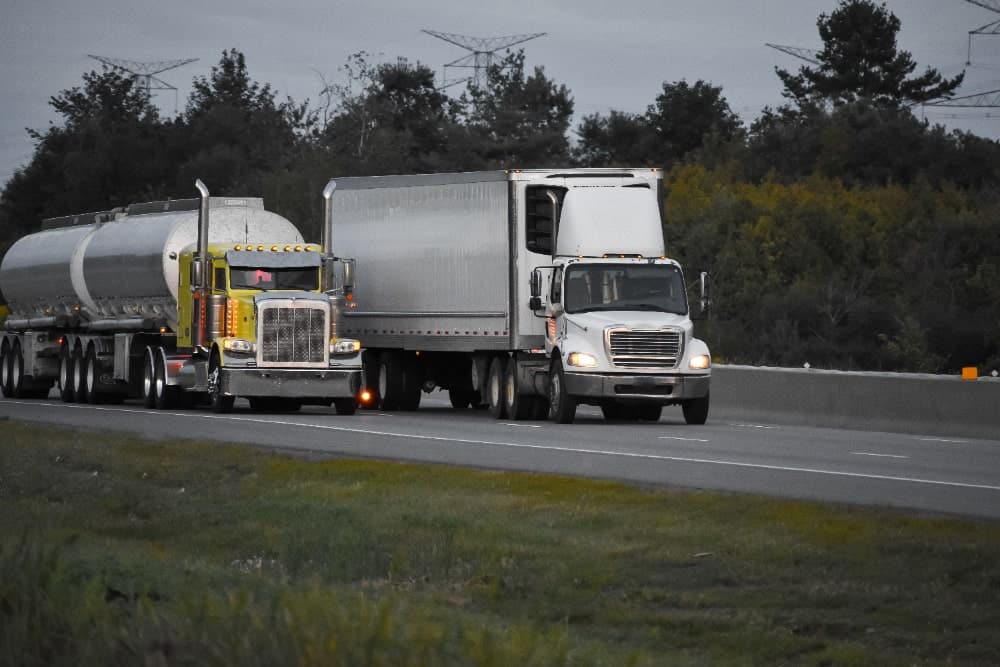

Thousands of fatalities and serious injuries occur each year in crashes with large trucks. Truck driver negligence is the main reason. Proving what is driver negligence in fatal truck accidents is a complex process. It requires showing how the driver breached their duty of care and then caused the collision and resulting deaths. Understanding what is a truck driver’s responsibility under federal and state regulations becomes essential when you build your case.
We’ll walk you through the legal elements needed to prove negligence and common types of violations on Highway 281. You’ll also learn about liable parties beyond the driver, evidence required, and Texas laws that affect your wrongful death claim. The Law Office of Arturo Martinez, PC, serves families throughout the Rio Grande Valley. Call us at (956) 781-6203 to get a free consultation.
Understanding What Is Driver Negligence in Fatal Truck Accidents
Truck driver negligence occurs when a commercial driver fails to operate their vehicle safely and this results in harm or death to another person. What is driver negligence in the context of fatal crashes requires proving four distinct legal elements that are the foundations of any successful wrongful death claim.
Duty of Care in Commercial Trucking
Every driver owes other motorists a duty of care to operate their vehicle safely and follow traffic laws. Truck drivers face a duty that extends way beyond what ordinary motorists face. Commercial drivers are held to a higher standard of care because they operate vehicles that can weigh up to 80,000 pounds. The physics alone explain why what is a truck driver responsibility has more stringent safety requirements.
The Federal Motor Carrier Safety Administration enforces federal regulations that establish strict safety standards governing driver behavior, vehicle maintenance and cargo handling. Violating these standards can serve as strong evidence that a driver or company failed to meet their duty of care. Commercial drivers must get a CDL license because the law expects them to exercise utmost caution at all times.
This heightened duty becomes even more critical during hazardous conditions. Federal regulations under 49 CFR Parts 392.14 require extreme caution when snow, ice, sleet, fog, mist, rain, dust, or smoke adversely affect visibility or traction. Truck drivers must reduce speed and sometimes stop driving when conditions are extreme.
Breach of Duty by the Truck Driver
A breach occurs when the truck driver’s actions or inactions fall short of the accepted standard of care for professional drivers. To cite an instance, if a truck driver exceeds allowed driving hours without resting, they have breached their duty. Federal hours-of-service regulations limit drivers to an 11-hour daily driving limit after 10 consecutive hours off duty, a 14-hour on-duty limit and a 60/70-hour limit over 7/8 straight days.
Examples of breach are driving under the influence, operating while fatigued, speeding, texting while driving and aggressive driving behaviors. Running a red light, driving under the influence of alcohol, or violating hours-of-service regulations establish a breach of duty. When truck drivers or companies violate federal safety regulations designed to prevent the type of harm that occurred, this creates negligence per se.
Causation Between Negligence and Fatal Injuries
Proving causation requires demonstrating a direct link between the driver’s breach and the fatal injuries. The truck driver breaching their duty by driving under the influence is not enough. You must show that the driver’s impairment from alcohol directly caused the accident and resulting death.
Causation is established through expert testimony from accident reconstruction specialists. These professionals analyze skid marks, vehicle damage, electronic logging devices and roadway conditions to determine how the crash occurred. Their findings become critical when proving negligence in commercial truck accidents. Opposing parties often attempt to argue that other factors contributed to the crash and this makes it essential to build a case that makes the connection undeniable.
Proving Damages in Wrongful Death Cases
The final element requires demonstrating actual damages resulting from the fatal truck accident. Damages in wrongful death cases are medical expenses incurred before death, funeral costs, lost wages and future earning capacity, and pain and suffering experienced by surviving family members. Property damage to vehicles also factors into the total losses.
Proving damages relies heavily on medical reports that show injuries were directly caused by the accident. The court often decides settlements based on injuries sustained and property damage costs. Wrongful death damages in Texas address both personal loss suffered by surviving family members and financial harm caused by the fatal crash.
The Law Office of Arturo Martinez, PC, serves families throughout the Rio Grande Valley and this covers Pharr, McAllen, Alamo, Mission and South Padre Island. Our experienced team focuses on personal injury cases and ensures personalized attention for every client. Call us at (956) 781-6203 for a 24/7 free consultation.
Common Types of Truck Driver Negligence on Highway 281
Highway 281 sees many fatal crashes each year where specific forms of truck driver negligence cause devastating collisions. These violation patterns strengthen your wrongful death claim and show how the driver breached their duty of care.
Fatigued Driving and Hours of Service Violations
Driver fatigue ranks among the leading causes of fatal truck accidents. Studies show that truck driver negligence contributes to 88% of all truck accidents. Federal hours-of-service regulations limit property-carrying drivers to 11 hours of driving after 10 consecutive hours off duty, with all driving occurring within a 14-hour on-duty window. Drivers must take a 30-minute break after 8 cumulative hours of driving and cannot drive after reaching 60 hours in 7 days or 70 hours in 8 days.
Staying awake for 17 hours straight impairs driving like a blood alcohol concentration of 0.05%. Twenty-four hours without sleep produces impairment comparable to 0.10% BAC. Trucking companies often pressure drivers to exceed legal limits through unrealistic delivery deadlines. This encourages falsified logbooks and bypasses Electronic Logging Device warnings. These violations establish what is driver negligence when fatigue causes a fatal Highway 281 crash.
Distracted Driving and Cell Phone Use
FMCSA research shows commercial drivers who dial handheld phones while driving face 6 times greater odds of being involved in a safety-critical event. Drivers who dial take their eyes off the roadway for an average of 3.8 seconds. At 55 mph they travel 306 feet without looking. Federal regulations prohibit commercial drivers from holding mobile devices or dialing by pressing more than a single button. Violations result in fines up to $2,750 for drivers and $11,000 for employers who allow this behavior.
Speeding and Aggressive Driving Behaviors
Excessive speed increases crash severity. Analysis by the Insurance Information Institute revealed 56 percent of fatal crashes involved aggressive driving, with excessive speed being the biggest factor. Aggressive truck drivers are three times as likely to crash as drowsy drivers. Reckless behaviors include tailgating smaller vehicles and unsafe lane changes. These actions show conscious disregard for safety and establish what is a truck driver responsibility violation.
Impaired Driving Under the Influence
Commercial drivers face a stricter blood alcohol concentration limit of 0.04% compared to the 0.08% standard for regular motorists. Federal regulations prohibit truck drivers from consuming alcohol within four hours of going on duty. In 2017, 165 truck drivers involved in fatal crashes tested at a BAC of 0.01% or higher, with 115 testing at 0.08% or higher. Prescription drugs and illegal substances also impair judgment and reaction times.
Failure to Maintain Proper Following Distance
A fully loaded tractor-trailer traveling at 55 mph in ideal conditions requires 196 feet to stop, compared to only 133 feet for passenger vehicles. Federal regulations under Section 392.14 require extreme caution when adverse conditions affect visibility or traction. Large trucks take 20 to 40% longer to stop than passenger cars under the same conditions. Texas recommends a minimum of two seconds between vehicles at 30 mph or less and four seconds at higher speeds. Rear-end collisions from following too closely can be fatal when commercial vehicles strike smaller cars.
Improper Lane Changes and Blind Spot Accidents
Improper lane changes account for more than 13% of truck accidents. Research shows 85 percent of drivers used turn signals during planned lane changes, but only 24 percent signaled during unplanned swerves to avoid forward threats. Drivers had an average of just 1.5 seconds to cross into adjacent lanes before encountering near-crash situations. Blind spot oversights and driver fatigue increase the likelihood truckers will sideswipe vehicles traveling in no-zones.
The Law Office of Arturo Martinez, PC, serves injured individuals in Pharr, McAllen, Alamo, Mission, South Padre Island, and the Rio Grande Valley. Our team focuses on personal injury cases and ensures customized attention for every client. Call us at (956) 781-6203 for a 24/7 free consultation.
Who Can Be Held Liable Beyond the Truck Driver
Fatal truck accidents often involve liability extending way beyond the reach and influence of the individual driver. The law allows injured victims to hold trucking companies and other parties accountable under vicarious liability.
Trucking Company Liability and Vicarious Responsibility
Vicarious liability stems from the Latin phrase “respondeat superior,” meaning “let the master answer”. The trucking company may share financial responsibility for the accident if a truck driver rear-ends another vehicle while making a delivery for their employer. This doctrine applies when the crash happened while the driver was performing job-related duties.
Trucking companies face direct liability for their own negligence when they fail to train drivers, maintain vehicles, enforce safety regulations, or hire drivers with poor safety records. Companies cannot blame drivers or mechanical issues since they bear ultimate responsibility to ensure safe operations.
Cargo Loading Companies and Improper Securement
Federal regulations under 49 C.F.R. § 392.9 require drivers to inspect loads for securement before transit. Shippers can be held accountable for resulting accidents when they fail to secure cargo. Liability may involve trucking companies that pressure drivers to haul overloaded cargo and cargo loading companies that fail to balance freight or provide incorrect cargo weights. Loads that are balanced or secured poorly can cause rollover or jackknife accidents.
Truck Maintenance Providers and Inspection Failures
Maintenance providers face liability when improper inspections or repairs lead to mechanical failures, such as brake or tire defects. Trucking companies are responsible for accidents occurring due to failing to provide maintenance on their vehicles. Shared liability occurs when multiple parties contribute to an accident, including trucking companies and maintenance contractors, parts manufacturers, and drivers who fail to report safety issues.
Truck and Parts Manufacturers in Defect Cases
Manufacturers can be held liable if a defective truck part, like a faulty brake system, contributed to the crash. Victims may rely on strict liability theory, which requires showing that the truck part was defective and caused injuries.
The Law Office of Arturo Martinez, PC, serves injured people in Pharr, McAllen, Alamo, Mission, and South Padre Island. Call us at (956) 781-6203 for a 24/7 free consultation.
Critical Evidence Needed to Prove Fatal Truck Accident Negligence
Proving truck driver negligence requires concrete evidence that establishes how the crash occurred and who bears responsibility. Evidence collection makes the difference between weak claims and successful wrongful death cases.
Black Box Data and Electronic Logging Devices
Commercial trucks contain Electronic Control Modules and Event Data Recorders that capture critical information before, during, and after crashes. Black boxes record vehicle speed, brake usage, engine RPM, sudden steering movements, crash impact forces, throttle position, airbag deployment, GPS location, and seat belt usage. Electronic Logging Devices track hours-of-service compliance and show whether drivers exceeded the 11-hour daily driving limit. Most commercial trucks must have black boxes installed under federal law.
Driver Qualification Files and Employment Records
Motor carriers must maintain qualification files for each driver. These files contain employment applications, motor vehicle records from all states where licenses were held in the past three years, previous employer safety performance inquiries, road test certificates, medical examiner certificates, and drug and alcohol test documentation. Carriers must obtain updated MVRs annually and review them to confirm no disqualifying offenses exist. Missing or incomplete qualification records result in violations, with penalties ranging from $1,000 to $10,000.
Truck Maintenance and Inspection Reports
Federal rules require carriers to inspect, repair, and maintain commercial vehicles in a systematic way. Every commercial motor vehicle must undergo detailed annual inspections documented in reports retained for 14 months. Carriers must keep inspection, repair, and maintenance records for one year while vehicles remain in service and six months after leaving their control. Maintenance records reveal patterns that show whether companies skipped required inspections, ignored reported defects, or documented recurring problems without proper repairs.
Police Reports and Accident Scene Documentation
Police crash reports document preliminary fault assessment, citations issued, driver and witness statements, road conditions, and crash narratives. Officers arriving at accident scenes write reports containing six-digit identifying numbers. Visual evidence captures vehicle damage showing impact points and collision force, road conditions proving weather or surface contributions, and injuries establishing trauma linked to impact.
Witness Statements and Video Footage
Independent witnesses provide live observations from neutral third parties with no financial interest in case outcomes. Eyewitnesses confirm speed and braking patterns before collisions, lane departures caused by fatigue or distraction, and traffic signal behavior like running red lights. Traffic cameras, surveillance footage, and dashcam recordings capture accidents as they happen.
Expert Testimony and Accident Reconstruction
Accident reconstruction experts use mathematics, physics, and engineering principles to determine crash circumstances. These specialists analyze skid marks, vehicle damage, electronic data, and roadway conditions to establish how collisions occurred. Expert witnesses translate complex crash dynamics into compelling narratives for judges and juries. Reconstruction reveals hidden factors like unsafe driving behavior, improperly loaded cargo, and vehicle defects.
The Law Office of Arturo Martinez, PC, serves injured individuals in Pharr, McAllen, Alamo, Mission, South Padre Island, and the Rio Grande Valley. We focus on personal injury cases and ensure individual-specific attention and expert representation for every client. Call us at (956) 781-6203 for a 24/7 free consultation.
Texas Laws Affecting Highway 281 Fatal Truck Accident Claims
Legal deadlines and liability rules shape every wrongful death claim after Highway 281 fatal truck accidents. Knowing how to navigate these Texas-specific laws determines your family’s compensation recovery after such a loss.
Texas Statute of Limitations for Wrongful Death Cases
Texas law gives you two years from the date of death to file a wrongful death claim under Texas Civil Practice and Remedies Code Section 16.003. The clock starts on the death date, not when the accident occurred. Missing this deadline means losing the right to pursue compensation through the courts, whatever the case strength. The practical deadline for evidence preservation is measured in days, not years.
Modified Comparative Negligence Rules in Texas
Texas uses modified comparative fault under Civil Practice and Remedies Code Section 33.001. This allows recovery as long as you are not more than 50% at fault. If the deceased person is found in part responsible for the accident, damages are reduced by that percentage. Being 51% or more at fault bars recovery.
Federal Motor Carrier Safety Regulations
The Federal Motor Carrier Safety Administration imposes requirements on commercial drivers and trucking companies. These requirements address hours of service, drug and alcohol testing, vehicle maintenance standards, cargo securement, and driver qualification. Violations can demonstrate negligence that contributed to the crash.
Damages Available in Texas Fatal Truck Accidents
Texas law gives surviving spouses, children, and parents of the deceased the right to file a wrongful death claim under Texas Civil Practice and Remedies Code Chapter 71. Recoverable losses include the financial support the deceased would have provided over their remaining working life. Loss of companionship and parental guidance can be recovered. Mental anguish of surviving family members is also compensable. Families can recover funeral and burial expenses and loss of inheritance.
The Law Office of Arturo Martinez, PC, serves injured individuals in Pharr, McAllen, Alamo, Mission, and South Padre Island. Call us at (956) 781-6203 for a 24/7 free consultation.
Conclusion
Proving what is driver negligence in fatal Highway 281 truck accidents requires establishing duty of care, breach, causation, and damages. Your case depends on gathering critical evidence quickly, from black box data to witness statements, before this information disappears. Texas gives you two years to file. Waiting puts your claim at risk.
The Law Office of Arturo Martinez, PC, focuses on personal injury cases throughout the Rio Grande Valley. Our team understands the complexities of proving truck driver negligence and fights to secure justice for families in Pharr, McAllen, Mission, and South Padre Island. We provide tailored attention for every client because your loss deserves dedicated representation. Call us at (956) 781-6203 for a 24/7 free consultation.
FAQs
Q1. What elements must be proven to establish negligence in a fatal truck accident case? To prove negligence in a fatal truck accident, you must establish four key elements: duty of care (the truck driver’s legal obligation to operate safely), breach of duty (how the driver failed to meet safety standards), causation (direct link between the breach and the fatal injuries), and damages (actual losses suffered by surviving family members). Each element must be supported by concrete evidence to build a successful wrongful death claim.
Q2. How does Texas’s comparative negligence rule affect truck accident claims? Texas follows a modified comparative negligence rule with a 51% bar, meaning you can recover damages only if the deceased person is found to be 50% or less at fault for the accident. If the deceased is determined to be 51% or more responsible, no compensation can be recovered. Any fault assigned to the deceased reduces the total damages proportionally.
Q3. What is the deadline for filing a wrongful death lawsuit after a fatal truck accident in Texas? Texas law provides a two-year statute of limitations from the date of death to file a wrongful death claim. This deadline is strict, and missing it typically results in losing the right to pursue compensation through the courts, regardless of how strong your case may be. However, evidence preservation should begin immediately, as critical information can disappear within days.
Q4. Who can be held responsible besides the truck driver in a fatal accident? Liability often extends beyond the truck driver to include the trucking company (through vicarious liability for employee actions), cargo loading companies (for improper securement), maintenance providers (for inspection failures), and truck or parts manufacturers (for defective components). Multiple parties may share responsibility when their negligence contributed to the fatal crash.
Q5. What types of evidence are most important for proving truck driver negligence? Critical evidence includes black box data and electronic logging devices (showing speed, braking, and hours-of-service compliance), driver qualification files and employment records, truck maintenance and inspection reports, police reports and accident scene documentation, witness statements and video footage, and expert testimony from accident reconstruction specialists. This evidence must be collected quickly before it’s lost or destroyed.