The statistics are alarming – 46% of car seats and booster seats aren’t installed correctly. This means almost half of all children could be at risk during every car ride.
Parents prioritize their children’s safety above everything else. Car seat safety often seems daunting, especially when choosing between rear-facing car seats and boosters or figuring out installation techniques. Here’s the silver lining – proper car seat safety measures can reduce crash injury risks by up to 71%.
This detailed guide will help you understand car seat safety, whether you’re preparing for your first child or need a bigger seat for your growing toddler. You’ll learn how to pick the right seat and install it properly. The guide also includes maintenance tips to keep your child safe throughout every experience.
Let’s head over to the significant details you should know to protect your precious cargo.
Understanding Car Seat Safety Basics
The Law Office of Arturo Martinez, PC believes that child safety on the road begins with simple car seat safety knowledge. Let’s get into the vital statistics and guidelines that parents must know.
Key Statistics on Child Car Safety
Road injuries continue to be a leading cause of preventable deaths among children in the United States. Motor vehicle crashes claimed the lives of 711 children under age 12 in 2021. Proper car seat use reduces the risk of fatal injury by 71% for infants and 54% for toddlers in passenger cars.
Types of Car Seats by Age Group
These car seats are recommended based on age and development:
- Rear-Facing Car Seats: Required for all infants under age 1, with recommendations to continue until age 2-4
- Forward-Facing Car Seats: For children who’ve outgrown rear-facing seats, typically used until at least age 5
- Booster Seats: Used after outgrowing forward-facing seats until seat belts fit properly (usually between ages 8-12)
- All-in-One Seats: Convertible options that adapt as your child grows
Latest Safety Guidelines and Regulations
Federal safety standards have brought vital improvements to protect children better. New requirements as of 2024 include:
- Mandatory side-impact crash testing
- Updated minimum child weight labels
- Enhanced school bus-specific restraint requirements
While 95% of families believe their children are properly restrained, the same percentage of car seats show some form of incorrect installation or use. This explains why following current guidelines is vital to your child’s safety.
Note that children under 13 are safest in the back seat, where the risk of fatal injury drops by about three-quarters for children up to age 3.
The Law Office of Arturo Martinez, PC offers expert legal guidance on car accident cases with children in McAllen and Pharr, Texas. Call us at (956) 781-6203 to get a free case evaluation.
Choosing the Right Car Seat
Our law office in McAllen, Texas sees many cases where the right car seat could have prevented serious injuries. Here’s a guide to help you choose the safest car seat for your child.
Age and Size Requirements
Your child’s specific needs should determine the car seat selection. The AAP states that infants and young children should ride in rear-facing seats until they reach their car seat manufacturer’s maximum weight or height limit. The safety guidelines recommend:
- Rear-facing seats: Use until at least age 2, often extending to age 4
- Forward-facing seats: Appropriate when child outgrows rear-facing limits
- Booster seats: Needed until child reaches 4 feet 9 inches in height
Safety Ratings and Certifications
U.S. regulations require all car seats to meet federal safety standards and pass strict crash performance testing. Key certifications to look for:
- FMVSS 213 certification label
- Manufacture date and model number
- Registration card for recall notifications
- Aircraft certification (if applicable)
Budget vs Premium Options
All car seats must meet identical federal safety standards. Price differences reflect additional features rather than simple safety. Premium models might include:
- Extended weight/height limits for longer use
- Premium fabrics and padding
- Easier installation features
- Slim-fit designs for multiple seat installations
A properly installed USD 40 car seat provides better protection than an incorrectly installed USD 400 seat. Key factors to think over:
- Vehicle compatibility
- Ease of installation
- Growth accommodation
- Lifestyle needs
Our team provides expert guidance on car accident cases with children in McAllen and Pharr, Texas. Call us at (956) 781-6203. We offer free case evaluations to protect your family’s rights after an accident.
Proper Installation Techniques
The Law Office of Arturo Martinez, PC has handled numerous car accident cases. Our experience shows that proper car seat installation plays a vital role in child safety. Parents should know these significant installation techniques.
LATCH System Installation Guide
The LATCH (Lower Anchors and Tethers for Children) system gives you the simplest car seat installation method. This system comes standard in vehicles and car seats manufactured after September 2002. Here’s what you need to know:
- Locate the lower anchors in your vehicle’s back seat
- Connect the car seat’s lower attachments to these anchors
- Ensure straps aren’t twisted
- Press down firmly while tightening
- Check for movement (should be less than 1 inch)
Note that LATCH has a maximum weight limit of 65 pounds, which includes both the car seat and child’s weight.
Seatbelt Installation Methods
Seat belt installation provides equal safety at the time LATCH isn’t available or your child exceeds the weight limit. Key steps for proper installation:
- Route the seat belt through the correct belt path
- Lock the seat belt according to your vehicle’s manual
- Remove all slack from the belt
- Secure the top tether for forward-facing seats
- Test for movement at the belt path
Common Installation Mistakes
Research indicates that all but one of these car seats have some form of installation error. These significant mistakes occur frequently:
- Using both LATCH and seat belt simultaneously (use only one method)
- Incorrect recline angle for rear-facing seats
- Failing to use the top tether with forward-facing seats
- Installing the seat too loosely (more than 1-inch movement)
A certified Child Passenger Safety Technician should check your car seat installation. The Law Office of Arturo Martinez, PC specializes in helping families affected by car accidents in McAllen and Pharr, Texas. You can reach our McAllen office at (956) 781-6203 to get a free case evaluation if you’re involved in an accident and concerned about your child’s safety.
Securing Your Child Correctly
Our legal team at The Law Office of Arturo Martinez, PC has seen how proper child restraint saves lives in car accidents. Let’s look at everything in securing your child correctly in their car seat.
Proper Harness Positioning
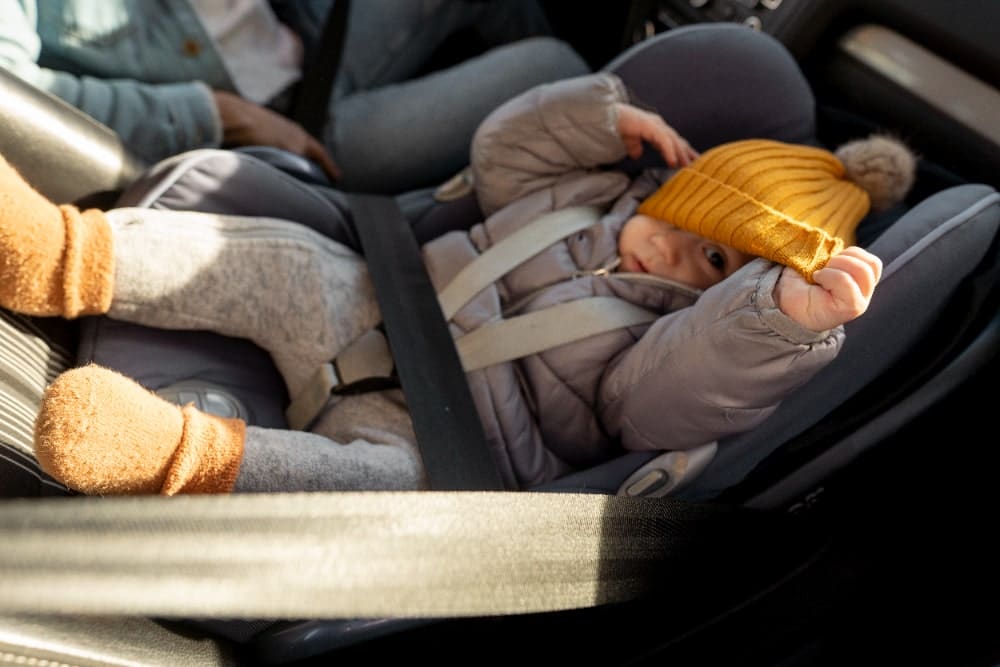
Your child’s safety depends on correct harness strap position. The straps should come through the car seat at or below your child’s shoulders for rear-facing seats. The straps need to be at or above the shoulders with forward-facing seats. This position prevents your child from sliding up the seat during a crash.
The chest clip needs to be at armpit level. This placement keeps the harness straps in the right position on your child’s shoulders during a crash.
Checking for Secure Fit
A secure harness can determine your child’s safety in an accident. Here’s how to check the fit:
- Buckle all harness straps and chest clip
- Tighten the harness until snug
- Perform the “pinch test” – try to pinch the harness material at your child’s shoulders
- If you can pinch excess webbing, the harness needs more tightening
Keep in mind that a properly installed car seat should not move more than 1 inch in any direction at the belt path.
Seasonal Adjustments
Car seat safety needs change with weather. Many parents make a common mistake during winter by securing children while wearing bulky coats. This creates dangerous gaps between the child and harness straps. The safer approach is to:
- Remove thick coats before buckling
- Place blankets or coats over the secured harness
- Use car seat ponchos designed for safety
Summer safety requires checking the seat’s temperature before placing your child in it. Plan trips during cooler times when possible.
The Law Office of Arturo Martinez, PC protects families in McAllen and Pharr, Texas. Call us at (956) 781-6203 to get a free case evaluation if you’ve experienced a car accident and have concerns about your child’s safety. Our expertise in personal injury cases will help protect your family’s rights.
Regular Safety Checks and Maintenance
Our team at The Law Office of Arturo Martinez, PC has learned that regular car seat maintenance is just as significant as proper installation. Let’s look at the checks and maintenance procedures that ensure your child’s continued safety.
Daily Safety Checklist
A quick daily inspection helps prevent serious safety issues. These items need checking before every ride:
- Harness straps lie flat without twists
- Buckles click securely into place
- Chest clip sits at armpit level
- Harness passes the “pinch test”
- Car seat doesn’t move more than one inch during testing
- Tether strap stays tight (for forward-facing seats)
- LATCH connections or seat belt path show no stress signs
When to Replace Car Seats
Several situations require immediate car seat replacement. The National Highway Traffic Safety Administration (NHTSA) recommends replacement after moderate or severe crashes. Key indicators for replacement include:
- Visible cracks or damage to the frame
- Expired seats (typically 6-10 years from manufacture date)
- After any accident where:
- Airbags deployed
- Vehicle door nearest to car seat was damaged
- Passengers sustained injuries
Note that registering your car seat with the manufacturer ensures you receive vital recall notifications. The SaferCar App provides free alerts about recalls and safety notices.
Cleaning and Maintenance Tips
Good maintenance extends your car seat’s life and ensures optimal safety. Based on manufacturer guidelines, we suggest these practices:
Regular Cleaning Protocol:
- Remove the cover according to manufacturer instructions
- Clean buckles with warm water only (avoid soaps and lubricants)
- Air dry components completely before reassembly
- Never submerge harness straps in water
Professional Inspection:
Certified technicians offer free inspections in most cases to check installation and condition. These inspections identify potential issues before they become safety hazards.
The Law Office of Arturo Martinez, PC has seen how proper car seat maintenance makes a vital difference in accident outcomes. If an accident involves your child’s safety in McAllen or Pharr, Texas, call us at (956) 781-6203 to get a free case evaluation. Our experienced team protects families affected by car accidents throughout the Rio Grande Valley.
Conclusion
The Law Office of Arturo Martinez, PC knows that car seat safety is the foundation of child passenger protection. Research shows that well-installed car seats can reduce fatal injuries by up to 71% for infants and 54% for toddlers.
Your child’s safety depends on several vital factors. You need age-appropriate seats and precise installation. The right way to secure children and regular safety inspections are equally important. Even small details like harness position and safety checks can make the biggest difference in crash protection.
Our legal team has seen how car seats save lives during accidents. We suggest getting your car seats inspected by certified technicians and staying updated about safety measures. If you’re in a car accident in McAllen or Pharr, Texas, call us at (956) 781-6203. We offer free case evaluations and will protect your family’s rights while you focus on recovery.
Your child’s safety needs constant attention to car seat details. The safest environment for your precious passengers comes from regular checks, correct installation, and proper daily use.